![youtube - [Video]](/web/image/product.image/2291/image_128/youtube%20-%20%5BVideo%5D?unique=89df650)
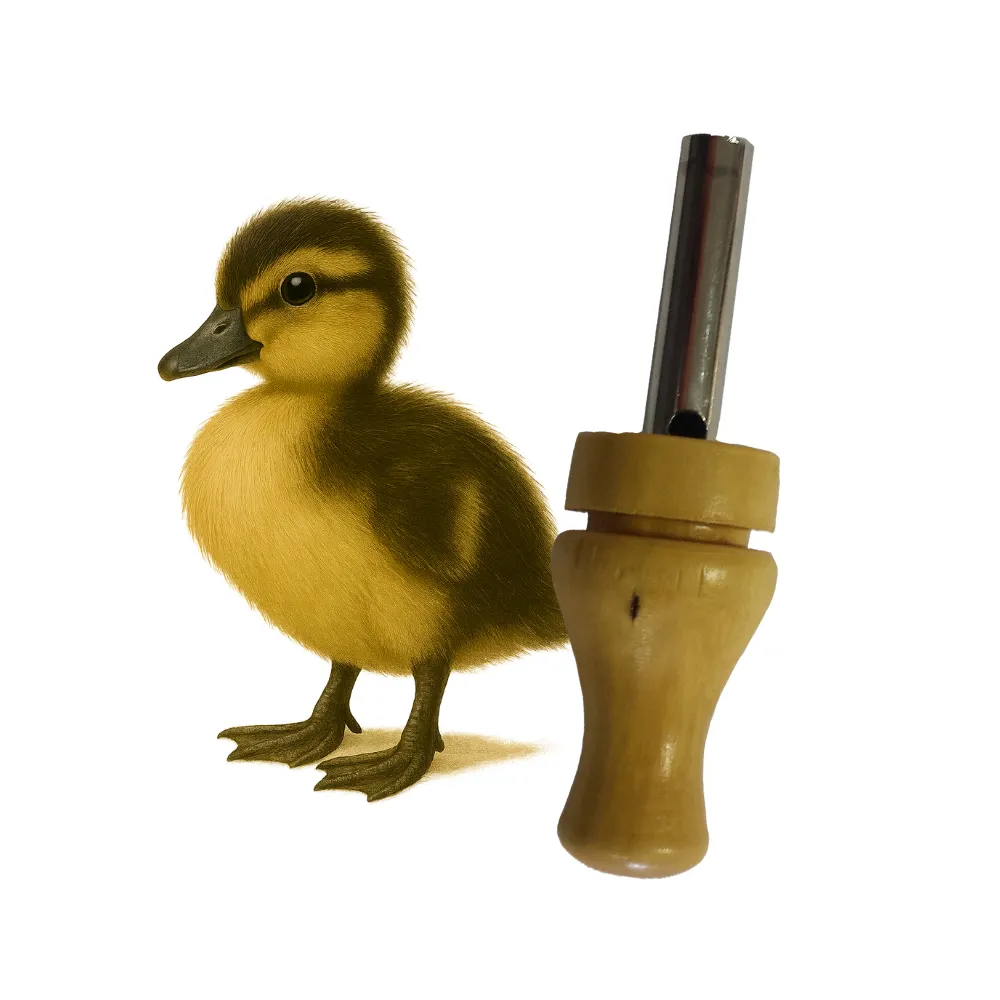
A specialized call for working the duckling
In the field, not all calls are worked the same way. TheZapos Caneton call allows you to reproduce the characteristic sounds of a young duck to add a specific tone to your calling device.
Its interest lies mainly in the finesse of vocal work. Rather than trying to produce a powerful call at all costs, this call allows you to integrate a different register into a calling sequence.
For hunters
If you regularly hunt waterfowl and already master the basics of calling, the Caneton can find its place as complementary call.
It is particularly interesting when you want to have multiple tones and adapt your call based on the observed situation rather than using the same sound systematically.
How to use the Les Zapos - Duckling call
1
Prepare your call
Keep the call easily accessible and check that it is clean and ready to use.
2
Work on the sound
Start with a steady breath and short sounds. Focus on accuracy first before seeking volume.
3
Incorporate it into your sequence
Use the Duckling alone or with other calls to vary the sounds and adapt your call to the situation.
4
Observe and adapt
Observe the birds' reactions and adjust the rhythm, volume, and frequency of your calls based on their behavior.
Why buy the Les Zapos - Duckling call?
A specific sound range
The call is dedicated to reproducing the vocalizations of ducklings. It therefore adds a different sound to your equipment.
A plus for waterfowl
It can complement a set of calls already used in the field and allow for varied sequences.
Easy to transport
Its call format is suitable for transport in the field. You can keep it within reach without unnecessarily weighing down your equipment.
Use without power
No batteries or power source are needed. The call is immediately available as soon as you need it.
Suitable for precision work
The work of a call is not just about producing volume. The Caneton allows you to work a specific sound range and refine the sequences.
A tool for the hunter who masters their call
It becomes truly useful when you already know how to observe birds and adapt your use of calls to the conditions encountered.

Valentin's opinion
I selected it for a simple reason: it is a specialized call that can have its place in a real waterfowl call box.
I especially recommend it to the hunter who already masters their calls and wants to work an additional range rather than looking for a universal call. In the field, I prefer to have a few well-mastered calls and know why I use them, rather than accumulating them without method.
FAQ - Frequently Asked Questions
It can be used by a beginner, but its value is greater for a hunter who already masters the basics of calling and wants to add a specialized sound to their equipment.
Yes. It can be integrated into a sequence that includes other calls to vary the sounds produced.
It is primarily intended for waterfowl hunting, and more specifically for duck calling.
Yes. It is particularly appreciated for maintaining constant communication while remaining free to move.
Yes, it is designed to accompany hunters in the field.
A good mastery of the basics makes it easier to use. For a beginner, it is better to start by working on breath control and consistency before trying to reproduce complex sequences.