![youtube - [Video]](/web/image/product.image/2305/image_128/youtube%20-%20%5BVideo%5D?unique=0558de7)
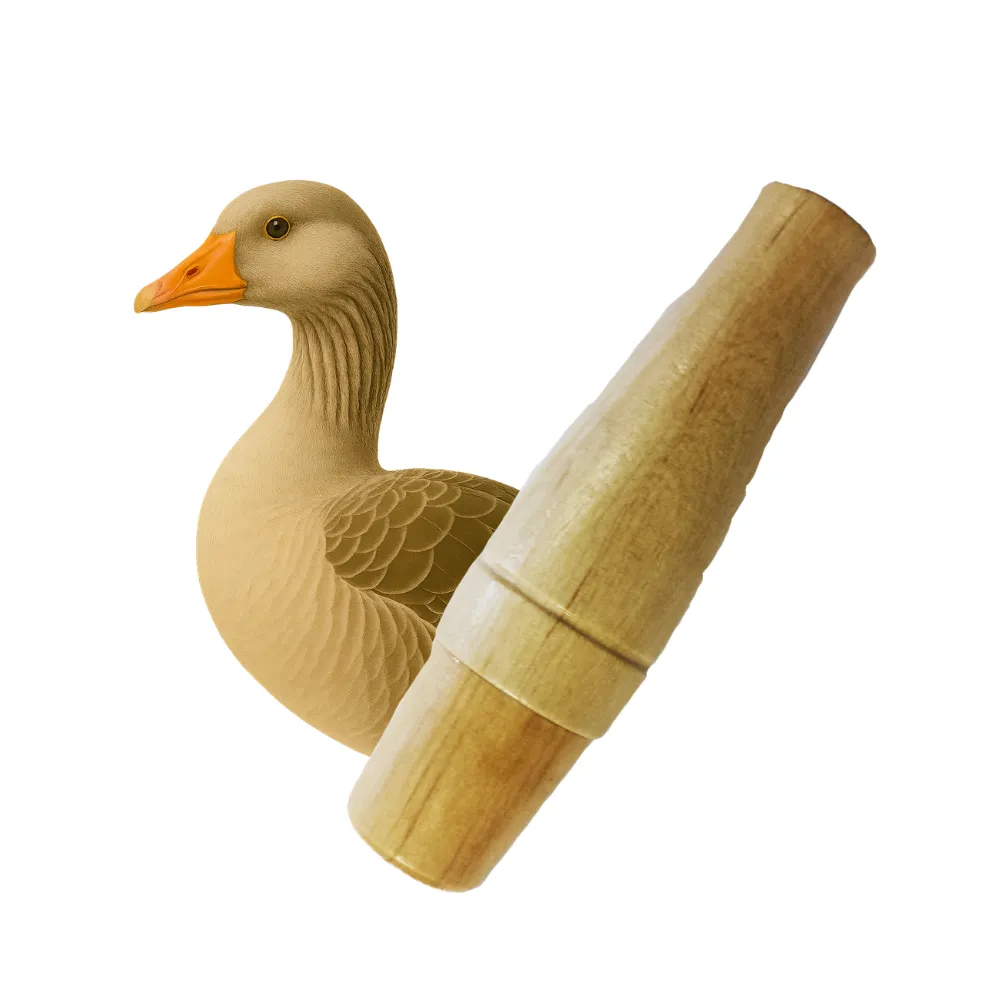
A call dedicated to the goose for working the call in the field
Goose hunting requires knowing how to observe before calling. Distance, wind direction, bird behavior, and positioning of the callers all play a role.
The Les Zapos – Goose complements this approach with a tool dedicated to calling geese. It allows the hunter to work on their vocalizations and adapt its use to the situation encountered.
For hunters
If you regularly practice goose hunting and want to integrate calling into your method, this call can find its place in your equipment.
It does require a minimum of learning. The right reflex is to start by mastering a few simple sounds before trying to reproduce more complex sequences.
How to use the Les Zapos - Goose call?
1
Read the situation
Before blowing into the call, observe the birds. Identify their direction, behavior, and any potential reaction to the first calls.
2
Find the right rhythm
Take the time to position the call correctly and work on your breath.
3
Adapt the vocalizations
Use the call to try to establish or maintain contact with the birds. The intensity and frequency of the calls should be adapted to the observed behavior.
4
Observe the reaction
After each sequence, see what happens.
If the birds change their trajectory or respond, adjust your call.
Why buy the Les Zapos - Goose call?
A tool dedicated to the goose
The call is specifically designed for calling geese. It naturally fits into equipment designed for this type of hunting.
Work on your technique
Using a call allows you to progress in mastering breath control, rhythm, and vocalizations.
Adapt your call to the terrain
The call can be used differently depending on the distance and behavior of the birds. This adaptability is particularly interesting when conditions change.
Complete a calling setup
The call can be integrated into a set that includes shapes or other equipment designed to create a credible situation.
Keep specialized equipment
A dedicated goose call allows you to keep in your equipment a tool intended for a specific use, rather than a versatile model designed for multiple species.
Develop your field experience
Like any call, its usefulness increases with practice. It gradually becomes an additional tool for analyzing a situation and choosing when to call — or when not to call.

Valentin's opinion
On a call, I first look at its place in a real field situation. For the goose, I mainly recommend it to the hunter who wants to take the time to work on their call rather than looking for an immediate solution.
My hunting experience has taught me that a call becomes interesting when you also know when not to use it. It is in this logic that I select this type of equipment: a simple, specialized tool that can truly be integrated into one's hunting style.
FAQ - Frequently Asked Questions
No. A beginner can start with a call as long as they accept a learning phase. It is better to work on a few sounds correctly before trying to reproduce complex sequences.
The effectiveness of a call depends on wind conditions, distance, terrain, and the behavior of the birds. Therefore, one should not consider a theoretical distance as a guarantee of results.
Yes, but its interest must be considered within the overall hunting setup. Depending on the situation, it can be used alone or in conjunction with other calling methods and an appropriate layout of the post.
A good starting point is to achieve a steady sound without forcing. If you have to blow very hard to produce a sound, reassess your position and your breath. Learning happens gradually, ideally with short and regular exercises.
Maintenance should respect the materials and design of the model. After use, check that no moisture or dirt remains inside and follow the manufacturer's recommendations for cleaning and storage.
Yes, it is designed to accompany outings dedicated to geese. For regular use, the most important thing is to keep the call clean, properly stored, and to continue working on your calling technique.
First, check that it matches your level and your use. If you are a beginner, prioritize a grip that is compatible with your learning. If you already practice regularly, especially look at whether the type of call produced matches your hunting style.
The main reflex is not to call systematically. First, observe the behavior of the birds, then adjust the volume, rhythm, and frequency of your calls. An overly insistent call can be counterproductive depending on the situation.
Its use is primarily aimed at calling the goose in the context of hunting. It can also be used to work with and observe vocalizations, depending on the context and applicable regulations.