![youtube - [Video]](/web/image/product.image/2292/image_128/youtube%20-%20%5BVideo%5D?unique=e9c5d3f)
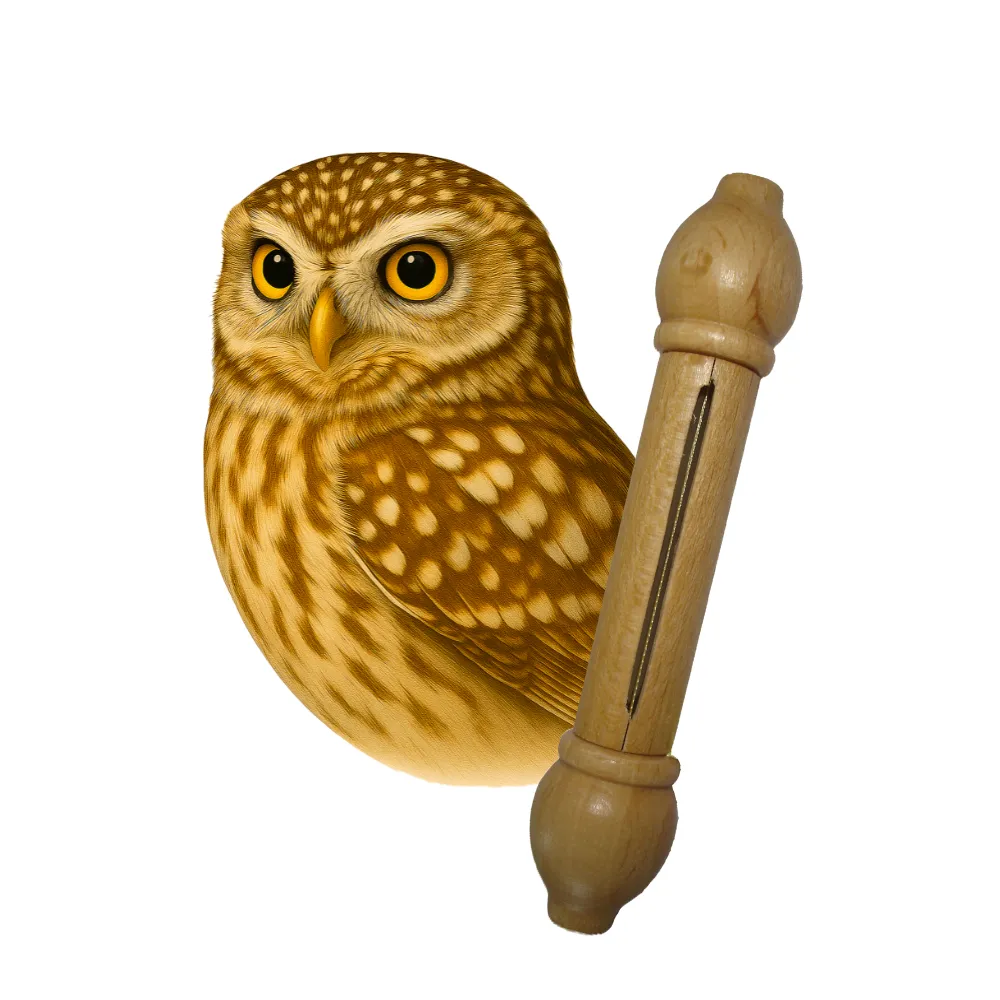
A call to search for the little owl in the field
The little owl is a small nocturnal raptor easily recognizable by its compact silhouette and characteristic call. However, spotting it in its environment can require patience: it often remains difficult to visually locate, especially when light decreases.
The call Les Zapos Little Owl reproduces its call to facilitate targeted observation. Its usefulness is particularly evident during twilight or nighttime outings, when listening takes over from direct observation.
For hunters
If you regularly practice in an area where the little owl is present, this call can be interesting for identifying its presence and better understanding the wildlife that frequents your area.
It naturally finds its place in an observation approach to the territory, complementing listening and knowledge of the biotope.
How to use the Les Zapos - Little Owl call?
1
Choose your area
Settle in a place where the presence of the little owl is known or likely, ideally at dusk.
2
Settle in discreetly
Position yourself calmly and avoid sudden movements. Give the area a moment to regain its calm.
3
Use the call
Mimic the song of the little owl with short and spaced calls. There's no need to multiply the solicitations.
4
Listen and observe
After each call, take the time to listen. A response may be vocal before the bird becomes visible.
Why buy the Les Zapos - Little Owl call?
Mimic the song of the little owl
The call is designed to reproduce the characteristic vocalization of the little owl and facilitate its detection.
Observe a discreet species
The little owl can go unnoticed despite its presence. The call allows for visual observation to be complemented by an auditory approach.
A simple tool
No batteries or electronics: the call works manually and is immediately available during an outing.
Easy to transport
Its compact format allows it to be carried in a pocket or in field gear without adding bulky equipment.
Enhance knowledge of the territory
Identifying the species present in an area helps to better understand its functioning and the habitats that surround it.
Encourage distant observation
The call makes it easier to locate the little owl without having to approach the area where it is located.

Valentin's opinion
I select this type of call when the goal is to have a simple tool that can be used directly in the field.
I would mainly use it during a twilight outing, in an area where the presence of the little owl is already likely, rather than calling randomly. I recommend it if you want to enhance your observation with listening and better understand the wildlife present in your territory.
FAQ - Frequently Asked Questions
The little owl frequents open agricultural areas, orchards, old buildings, and areas with cavities or ancient trees.
Not necessarily. Its small size, nocturnal habits, and ability to remain discreet make listening particularly useful for detecting its presence.
The little owl is mainly active at dusk and during the night, so low-light periods are generally more suitable for its observation.
It is designed to reproduce the call of the little owl. Therefore, it should not be considered a versatile call for all species of nocturnal raptors.
The rule is simple: short and spaced calls, attentive observation of reactions, and immediate cessation in case of signs of stress or unusual behavior. The call should remain a tool for observation, not a constant solicitation.
Several clues can help: direct observation, call heard at dusk, presence in a suitable habitat, or signs of activity. The call then complements this search.
Stop the calls and focus on listening and observing. Its response can help gradually determine its direction and position.
A manual call is immediately available, requires no batteries, and is easy to carry during a field outing.